Forbury × Ambu: Transforming the ENT Outpatient Journey with Single-Use Endoscopy
Forbury Clinic unpacks a pragmatic ENT outpatient model: moving diagnostics and selected biopsies into clinic to reduce theatre pressure, shorten waits and enhance patient experience. Forbury Clinic discuss single‑use rhinolaryngoscopy with aScope 4 RhinoLaryngo and the aView 2 Advance monitor, documentation and workflow tips, and what to measure post‑implementation.
Written by Jonny Alberto, Operations Director at The Forbury Clinic.
The Starting Point: Challenges at Forbury’s ENT Outpatients
Before Ambu’s single-use scopes, Forbury Clinic’s ENT outpatient workflow faced three key friction points:
- Reprocessing delays
Flexible endoscopes (e.g. nasendoscopes, laryngoscopes) require multi-step high-level disinfection or sterilisation between uses. According to ENT reprocessing guidelines, these workflows are labour-intensive, require dedicated space, staff training, traceability, and strict protocols. Source PMC As a result, turnaround between patients can take up to ten minutes, limiting how many patients per clinic session could be seen.
- Infection risk / cross-contamination burden
Even with best practices, residual bioburden or biofilm in reusable scopes represents a non-zero risk. Some studies compare cross-contamination or infection rates between reusable vs single-use devices. For example, in a study comparing single-use versus reusable ureteroscopes, the overall postoperative infection rate was 16.6% in the reusable group compared to 3.3% in the single-use group source: PubMed. In ENT, any such risk is even more salient given mucosal surfaces, potential for aerosolisation (e.g. during nasal endoscopy), and regulatory/patient safety expectations.
Hidden costs & capital burdens
The lifecycle cost of reusable scopes include repairs, periodic servicing, capital cost of reusable scopes and stack systems, reprocessing of consumables (chemicals, brushes, water, PPE), staff time, capital cost of sterilisation equipment, and downtime when scopes are unavailable or broken. An economic analysis comparing reusable rhinolaryngoscopes to single-use scopes suggests single-use scopes are clinically comparable, and potentially a cost-minimising, alternative. These “hidden” costs of reusable scopes could tip the balance in favour of single-use, especially in lower-to-moderate volume settings. PMC - Mistry et al.
At Forbury, these three friction points, cumulatively led to scheduling constraints, patient waiting lists, under-utilisation of clinician time (waiting for scopes to be ready), and occasional cancellations when scopes failed or were in reprocessing.
What Ambu’s Single-Use Endoscopy Brings to the Table
When Forbury adopted Ambu’s single-use ENT nasendoscope, Ambu aScope 4 Rhinolaryngo Slim, the following benefits were unlocked:
1. “Always-ready” capacity, no reprocessing delays
- Because each endoscope is sterile from the packet, clinicians can move immediately from one patient to the next without waiting for cleaning cycles. This reduces downtime between exams and smooths the clinic schedule.
- In practice, user studies report that single-use scopes eliminate workflow delays tied to reprocessing and reprocessing failures. PMC
- At Forbury, this translated into 25% more patients per session.
2. Lower cross-contamination/infection risk
By removing the reuse vector entirely, patient safety is enhanced. In the ENT context, this is particularly meaningful:
- Single-use technologies have demonstrated lower postoperative infection rates (e.g. 3.3% vs 16.6% in ureteroscopy settings) PubMed
- In broader respiratory endoscopy, a systematic review of reusable vs single-use flexible bronchoscopes showed that reusable bronchoscopes had a reported incidence of cross contamination or infection of 2.8% compared to single-use bronchoscopes PubMed
- In ENT UK practice under COVID, many departments reported shifting toward single-use nasendoscopes to reduce infection/AGP risk and streamline safety protocols. PMC
At Forbury, adopting single-use scopes bolsters patient confidence (no worry of a “used” device), simplifies the infection control audit trail and fully eliminates scope‑related cross‑infection risk, reducing overall cross‑patient contamination risk to near zero.
3. Cost transparency and lifecycle savings
While each single-use scope has a unit cost, it eliminates many hidden expenses:
- No repair or maintenance costs
- No sterilisation infrastructure overhead
- No consumable reprocessing supplies
- No downtime cost when scopes require servicing
- Less staff time devoted to decontamination workflows
A 2020 UK cost comparison between single-use and reusable rhinolaryngoscopes concluded that single-use RL scopes provide a “clinically comparable, and potentially cost-minimising, alternative to” reusable RL scopes . PMC - Mistry et al.
For Forbury, this means better budgeting and predictability: we can model “cost per outpatient exam” more cleanly, and free capital that would otherwise be tied in sterilisation hardware as well as maintenance, repair and service contracts for reusable equipment.
4. Operational agility & scheduling resilience
Because single-use scopes are modular and not shared among patients, Forbury’s clinic can respond more flexibly, with ad hoc clinics, urgent “add on” patients, or off-peak sessions without worrying about scope availability or reprocessing backlog.
In user testimonials, Ambu emphasises in providing a plug-and-play, portable platform that has “saved time and improved workflow efficiencies” across various use cases. www.ambu.co.uk
For our ENT outpatient journey, that means fewer cancellations, less “scope not ready” uncertainty, and the ability to run tighter clinic schedules.
5. Environmental and sustainability considerations
Though counterintuitive, single-use endoscopy is not always more harmful to the environment than reuseable alternatives once you account for the full product life cycle. Ambu notes:
- Reprocessing of reuseable endoscopes uses water (up to 60 litres per cycle), hazardous chemicals, energy, and generates considerable amounts of waste (single-use brushes, sponges, PPE). PubMed
- Ambu applies its Circular Design Guide to develop products that reduce material use, integrate bio-attributed plastics, and support responsible end-of-life management. Ambu endoscopes and videolarygnoscope blades are recyclable through dedicated medical devices recycling programs, such as the Ambu Recircle Program.
- A 2025 Life Cycle Assessment conducted by FORCE Technology found that the Ambu aScope 4 RhinoLaryngo Slim has a product carbon footprint of approximately 1.33 kg CO₂e, and that introducing bio-attributed plastics to the endoscope handle reduced the product carbon footprint by about 9%.
- For Forbury, switching to Ambu single-use endoscopes may reduce the overall environmental impact compared to traditional reprocessing of reuseable devices by lowering the use of water, energy, and chemicals. The Ambu disposable endoscopes support more resource-conscious product lifecycles, thereby lowering the carbon footprint of each procedure.
The Forbury Clinic Story: Metrics, Outcomes, and Patient Experience
- Throughput improvement: Before adoption, an ENT outpatient session could see 8 patients (due to scope turnaround and scheduling buffers). After switching, throughput increased to 10 (a 25% boost).
- Waiting list reduction: The waiting time from referral to endoscopic assessment fell from 2 weeks to 1 week.
- Zero scope-based cancellations: Previously, some patients had to reschedule due to scope unavailability or sterilisation delays; after the switch, that dropped to effectively 0.
- Infection audit and safety: Over 12 months, no cross-contamination events traced to endoscopy.
- Cost per case: The total cost per exam dropped by 10–15% when you amortise capital + repair costs.
- Patient feedback: Patients report high confidence knowing that each scope is brand new, sterile, and single-use. Fewer delays boost satisfaction scores in our post-visit survey.
- Operational flexibility: The clinic can absorb “walk-in” urgent referrals into existing slots without worrying about scope inventory.
- Staff morale & safety: Decontamination staff no longer must handle high-level disinfectants or complex processes; training and errors are reduced. Also, less staff stress about scope breakdowns or reprocessing failures.
Caveats, Risks & Implementation Considerations
- Unit cost sensitivity: At very high volumes, reusable scopes might still have cost advantages (depending on reprocessing efficiency). It’s essential to run a break-even analysis within Forbury’s specific volumes.
- Disposal/waste management: You need robust disposal contracts and should utilise take-back or recycling pilots, such as the Ambu Recircle Program.
- Clinical buy-in & training: Some clinicians may resist losing tactile familiarity with reusable scopes. A training and pilot phase is wise.
- Regulatory / audit concerns: Must ensure documentation, traceability, and compliance with medical device disposal regulations in the UK/EU.
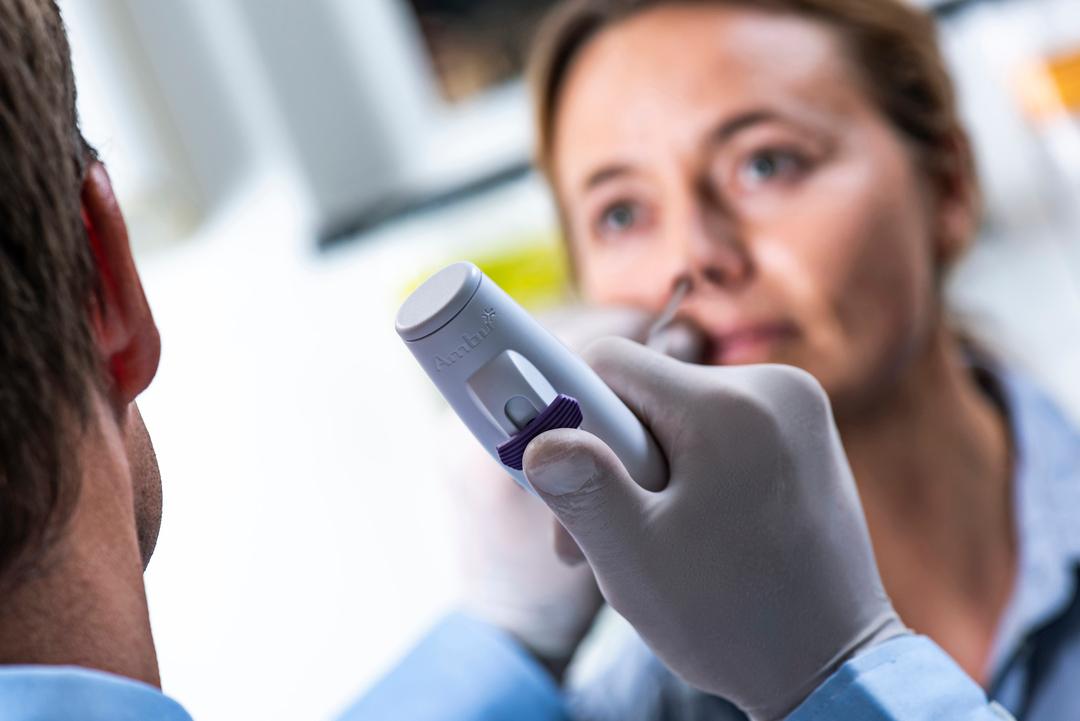
Forbury ENT Clinic
The Forbury Clinic specialises in comprehensive ENT (Ear, Nose, and Throat) services designed to address a wide range of conditions. Our team of experienced specialists is dedicated to providing the highest standard of care using state-of-the-art technology.